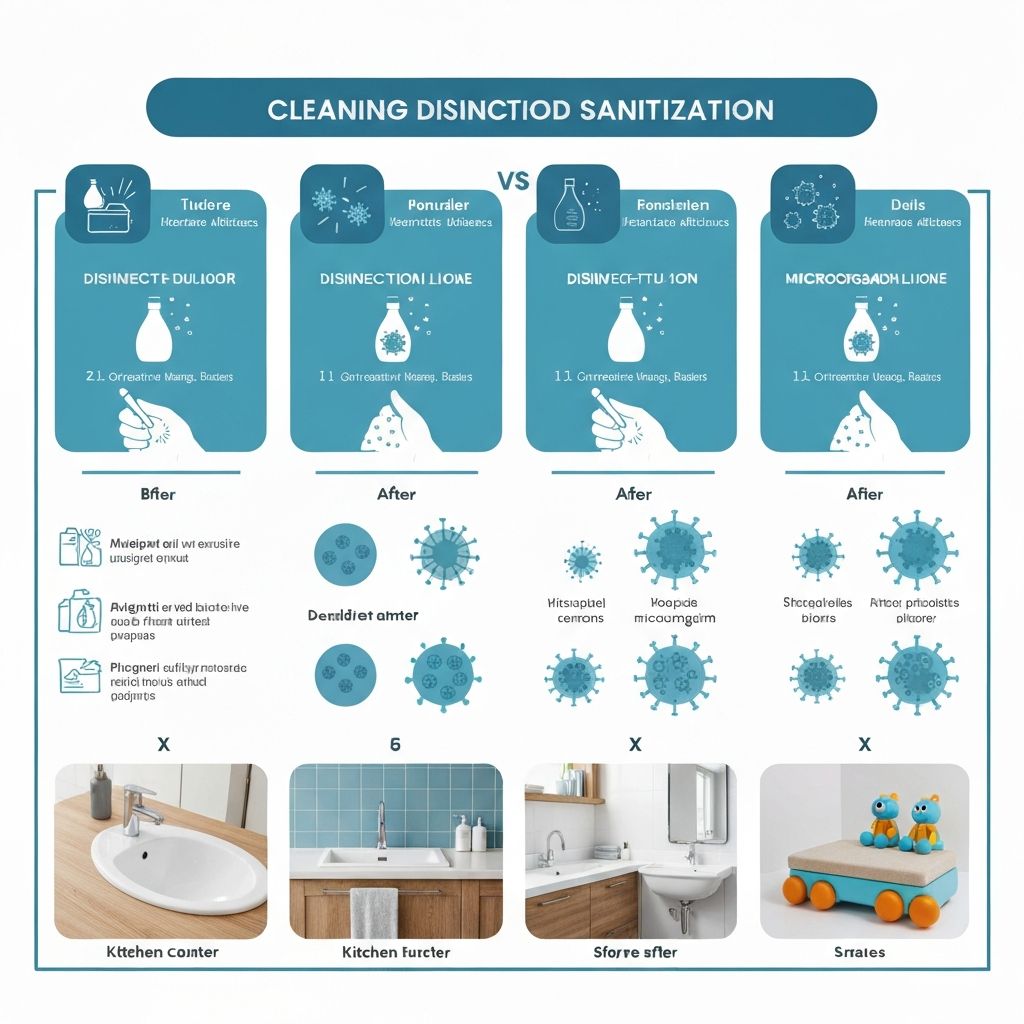
The terms cleaning, sanitizing, and disinfecting are often used interchangeably, but they describe genuinely different processes with different outcomes. Using the wrong one, or assuming a quick wipe-down disinfects, can leave your facility exposed to illness and, in regulated settings, out of compliance. Understanding the distinction helps you request the right service for each area of your building and protect the people who use it.
The Three Levels of Clean
Public health authorities including the CDC and EPA define a clear hierarchy. Each step serves a different purpose, and effective disinfection actually depends on doing them in order.
Cleaning
Cleaning physically removes dirt, dust, and organic matter from a surface, usually with soap or detergent and water. It does not necessarily kill germs, but it removes them along with the grime, and it is the essential first step. You cannot effectively disinfect a dirty surface, because debris shields pathogens from the disinfectant.
Sanitizing
Sanitizing reduces the number of germs on a surface to a level considered safe by public health standards. Per widely used EPA and food-safety benchmarks, a sanitizer is generally expected to reduce relevant bacteria by about 99.9 percent. Sanitizing works quickly and is well suited to surfaces that contact food or skin.
Disinfecting
Disinfecting kills a much broader range of pathogens, including many viruses, and is held to a higher standard than sanitizing. EPA-registered disinfectants are tested to destroy specific organisms, and the product label lists exactly which ones and how long the surface must stay wet to achieve that result.
The Critical Detail: Dwell Time
The single most misunderstood part of disinfection is dwell time, also called contact time. This is the number of minutes a surface must remain visibly wet with the disinfectant for it to actually kill the pathogens on the label. Many products require several minutes. Spraying and immediately wiping, the most common mistake, does not disinfect at all. Professional crews are trained to honor dwell times, which is a major reason proper disinfection is harder to achieve than it looks.
When to Sanitize vs. When to Disinfect
Matching the process to the surface saves time and money while keeping people safe.
- Sanitize food-contact surfaces such as break room counters, tables, and kitchen prep areas, where lower toxicity and food safety are priorities.
- Disinfect high-touch and high-risk surfaces including restroom fixtures, door handles, shared electronics, and any area where illness transmission is a concern.
- Disinfect after known exposure such as when an employee has been sick, or in medical settings where infection control is mandatory.
- Clean everything first, because both sanitizing and disinfecting are far less effective on soiled surfaces.
A Common and Costly Mistake
One of the most frequent errors in commercial settings is treating disinfecting wipes or sprays as an all-in-one solution on visibly dirty surfaces. Because organic matter deactivates many disinfectants and physically shields germs, disinfecting a soiled surface gives a false sense of safety, the surface looks handled but the pathogens survive. The correct sequence is always clean first, then disinfect. Another common misstep is switching between incompatible products; mixing certain cleaners, such as bleach and ammonia, creates dangerous fumes, which is another reason trained crews and read-the-label discipline matter.
Why This Matters for Your Facility
Over-disinfecting every surface wastes chemicals and labor and can be unnecessarily harsh, while under-disinfecting high-touch points leaves your team vulnerable. A well-designed cleaning program applies the right level to each area. In regulated environments, using the correct EPA-registered products and documenting the process is also part of meeting OSHA and healthcare compliance expectations. For medical, dental, and food-service facilities in particular, the distinction is not academic; it directly affects inspection outcomes and the safety of the people you serve.
A Simple Way to Remember It
- Cleaning removes germs and dirt.
- Sanitizing reduces germs to a safe level.
- Disinfecting kills a broad range of germs, with the required contact time.
Getting It Right in Naperville
Knowing the difference is one thing; executing it consistently across an entire facility is another. Naperville Janitors trains its crews to apply the correct process to every surface, using EPA-registered disinfectants and honoring proper dwell times so your building is genuinely protected, not just superficially wiped. Serving more than 320 businesses across Naperville and the surrounding suburbs for over a decade, we build cleaning and disinfection programs tailored to how your space is used. Contact our team for a free quote and we will map out the right approach for your facility.