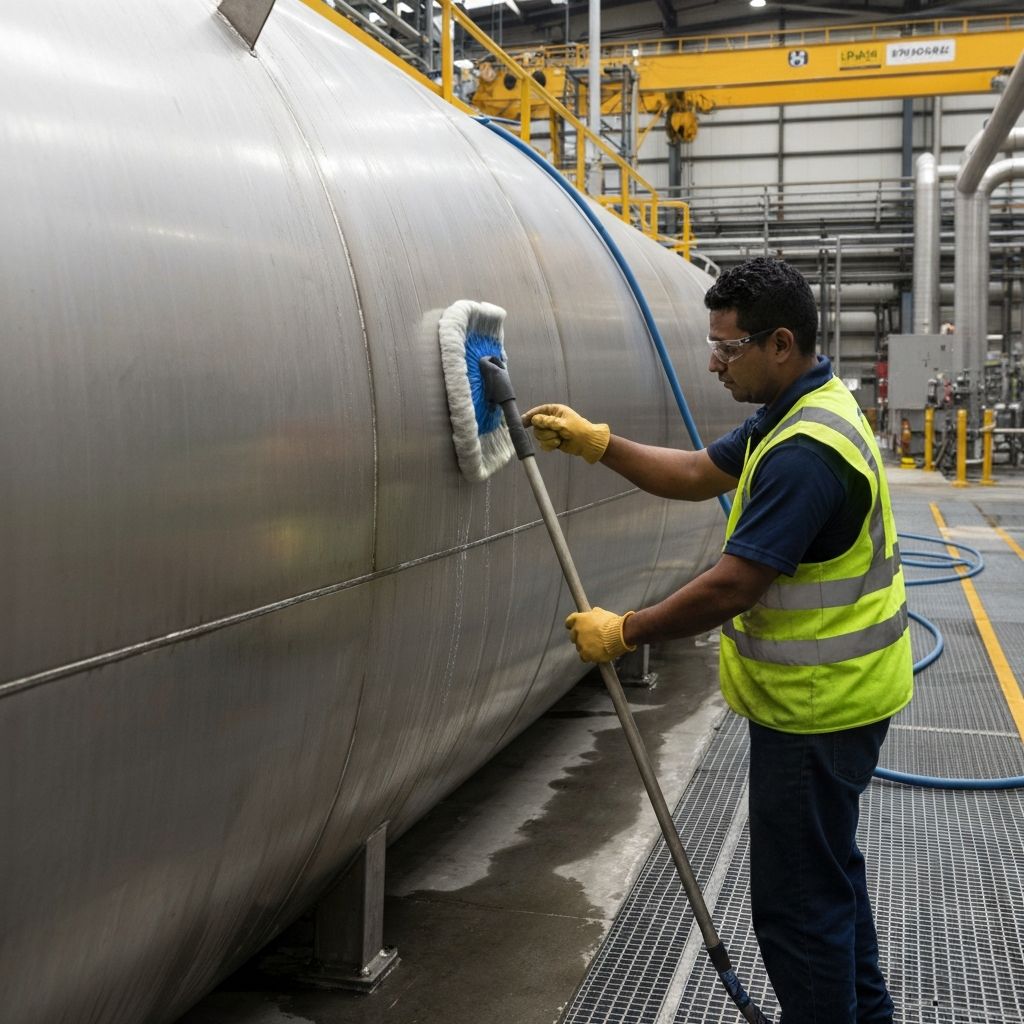
Industrial cleaning is one of the most hazardous jobs on any facility floor. Crews work around heavy machinery, chemical residues, confined spaces, elevated surfaces, and slippery conditions—often during off-hours with reduced staffing. For plant managers, facility directors, and EHS leaders, understanding the safety protocols behind industrial cleaning is not optional. It is central to protecting workers, staying compliant with OSHA, and avoiding costly incidents. This guide covers the core protocols every manager overseeing industrial cleaning should know.
Start With a Hazard Assessment
Before any crew mops a floor or degreases a machine, the work area needs a documented hazard assessment. OSHA's Personal Protective Equipment standard (29 CFR 1910.132) requires employers to assess the workplace to determine what hazards are present and what protection is needed. In an industrial setting this means identifying chemical exposures, slip and fall risks, moving equipment, electrical hazards, dust, and any confined spaces. The assessment should drive everything that follows—from PPE selection to the sequence of tasks.
Hazard Communication and Chemical Safety
Industrial cleaning relies on powerful chemicals: degreasers, acids, caustics, solvents, and disinfectants. Under OSHA's Hazard Communication Standard (29 CFR 1910.1200), every hazardous chemical must have an accessible Safety Data Sheet, proper labeling, and trained handlers.
- Never mix chemicals unless the label explicitly allows it. Combining bleach and ammonia, or acids and bleach, can release toxic gases.
- Respect dilution ratios and contact times. Over-concentration wastes product and increases exposure risk without improving results.
- Store chemicals correctly, separating incompatible substances and keeping containers sealed, labeled, and away from heat sources.
- Ensure ventilation when using solvents or strong disinfectants, and provide respiratory protection where SDS or air monitoring indicate it is needed.
Lockout/Tagout Around Machinery
Cleaning near or inside production equipment is a leading cause of serious industrial injuries. OSHA's Control of Hazardous Energy standard—Lockout/Tagout (29 CFR 1910.147)—requires that machines be shut down and their energy sources isolated and locked before anyone cleans areas where unexpected startup or stored energy could cause harm. Cleaning crews should never bypass guards, reach into equipment, or clean moving parts. Coordinate closely with maintenance so authorized personnel perform lockout, and confirm zero-energy state before work begins.
Confined Space Entry
Tanks, silos, pits, ducts, and vessels are common cleaning targets and among the deadliest. A permit-required confined space (29 CFR 1910.146) can hold oxygen-deficient or toxic atmospheres, engulfment hazards, and difficult exit paths. Entry requires atmospheric testing, ventilation, a trained attendant stationed outside, communication procedures, and a rescue plan. No worker should ever enter a confined space without a proper permit and monitoring in place.
Personal Protective Equipment
PPE is the last line of defense, not the first. Once hazards are controlled as much as possible, the right equipment protects the worker.
- Chemical-resistant gloves and aprons matched to the specific chemicals in use—not all glove materials resist all chemicals.
- Eye and face protection such as splash goggles or face shields when spraying or handling corrosives.
- Respiratory protection where dusts, mists, or vapors exceed safe limits, with fit testing and a written respiratory program.
- Slip-resistant footwear and, where needed, steel-toe protection for heavy environments.
- High-visibility clothing in areas with forklift or vehicle traffic.
Preventing Slips, Trips, and Falls
Wet floors, hoses, cords, and cleaning equipment create trip hazards, and falls remain one of the most common causes of workplace injury. Crews should use wet-floor signage, keep hoses and cords routed out of walkways, work in sections so dry paths remain, and dry surfaces promptly. Work at height—cleaning overhead structures, mezzanines, or tanks—requires fall protection compliant with OSHA's walking-working surfaces and fall protection standards.
Training, Documentation, and Emergency Readiness
Protocols only work if people are trained on them. Every crew member should receive documented training on hazard communication, LOTO awareness, PPE use, and emergency procedures before working in the facility.
- Know emergency locations: eyewash stations, safety showers, exits, and first-aid points.
- Report and record incidents promptly, using them to improve procedures.
- Refresh training regularly, especially when new chemicals or equipment are introduced.
Good documentation protects both workers and the organization during audits or inspections.
Work With a Safety-Focused Cleaning Partner in Naperville
Industrial cleaning done right protects your people, your equipment, and your compliance record—but it demands crews who genuinely understand OSHA standards and treat safety as non-negotiable. Naperville Janitors brings more than ten years of experience serving industrial and manufacturing facilities across Naperville and the surrounding suburbs, with trained crews who follow rigorous hazard-communication, lockout/tagout, and PPE protocols on every job. If you want a cleaning partner who takes safety as seriously as you do, reach out to our team for a free facility assessment and quote.