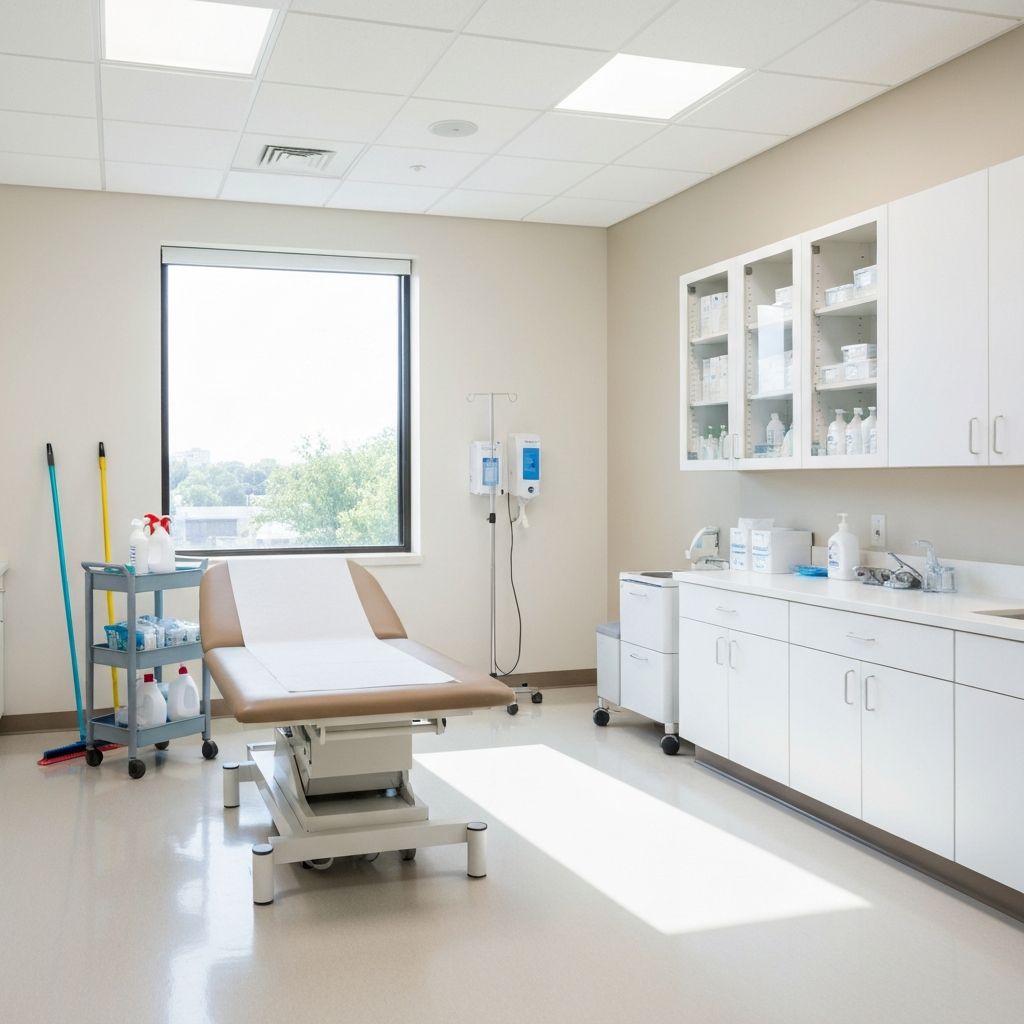
Cleaning a medical office is fundamentally different from cleaning a standard commercial space. The stakes are higher, the standards are stricter, and the consequences of getting it wrong include patient infections, failed inspections, and regulatory penalties. Medical facilities must satisfy overlapping requirements from OSHA, the CDC, and HIPAA, all while maintaining an environment where sick and vulnerable patients can be treated safely. This guide breaks down what medical office cleaning actually requires and why professional, healthcare-trained crews matter so much.
Why Medical Cleaning Standards Are Higher
Healthcare-associated infections are a serious risk, and contaminated surfaces are a known route of transmission. Patients in a medical office are often already ill or immunocompromised, so pathogens that a healthy person would shrug off can cause real harm. On top of infection control, medical practices handle protected health information and regulated waste, which brings privacy and disposal rules into the cleaning conversation. Medical cleaning isn't just about appearance—it's a patient-safety and compliance function.
Cleaning, Disinfecting, and Contact Time
The CDC's environmental infection control guidance distinguishes between cleaning (removing soil) and disinfecting (killing pathogens), and both are essential in healthcare settings.
- Clean first, then disinfect. Organic material can inactivate disinfectants, so soil must be removed before disinfection to be effective.
- Use EPA-registered hospital-grade disinfectants, selected for the pathogens of concern and used strictly according to label directions.
- Honor the contact (dwell) time. Surfaces must remain wet for the full time specified on the label. This is one of the most commonly violated—and most important—requirements.
- Prioritize high-touch surfaces: exam tables, bed rails, door handles, light switches, faucets, and countertops.
OSHA Bloodborne Pathogens Standard
Any facility where workers may contact blood or other potentially infectious materials must comply with OSHA's Bloodborne Pathogens Standard (29 CFR 1910.1030). For cleaning crews this has direct, concrete implications.
- PPE is mandatory: gloves at minimum, plus gowns, masks, or eye protection where splash or exposure is possible.
- Spills of blood or infectious material must be decontaminated with an appropriate disinfectant using proper procedures.
- Sharps and regulated waste must be handled through the facility's designated containers and never placed in regular trash—crews should know what they can and cannot touch.
- Training and an exposure control plan are required for workers with occupational exposure.
Zoning and Cross-Contamination Control
A defining feature of medical cleaning is preventing germs from moving between areas. This is achieved through disciplined technique.
Color-Coded Systems
Many medical facilities use color-coded microfiber cloths and mops—for example, one color for restrooms, another for exam rooms, another for general areas—so tools are never carried from a dirty zone into a clean one. Cleaning should also proceed from cleaner to dirtier areas and from high to low surfaces.
Terminal and Routine Cleaning
Exam and treatment rooms require routine cleaning between patients and more thorough terminal cleaning on a schedule. High-risk areas warrant more frequent, more rigorous attention than waiting rooms or offices.
HIPAA and Patient Privacy
HIPAA governs the confidentiality of protected health information, and cleaning staff work in spaces where that information is present—charts, screens, paperwork, and conversations. Compliance means cleaning crews are trained never to read, photograph, move, or discuss patient records, and to work in a way that respects privacy. A reputable medical cleaning provider addresses this through training and, often, confidentiality agreements. Overlooking HIPAA in the cleaning contract is a real and avoidable risk.
Regulated Medical Waste
Medical waste—sharps, contaminated materials, biohazardous items—is subject to strict disposal rules that vary by state and are enforced through facility protocols. Cleaning crews must understand the boundary between general trash and regulated waste, follow the facility's segregation system, and never improvise. Proper handling protects both workers and the public.
Documentation and Accountability
Compliance requires proof. Well-run medical cleaning programs document what was cleaned, when, and by whom, using checklists and logs that hold up to inspection.
- Cleaning logs for exam rooms, restrooms, and high-touch surfaces.
- Staff training records covering bloodborne pathogens, PPE, and HIPAA.
- Product documentation, including Safety Data Sheets and disinfectant registrations.
This paper trail turns good practices into demonstrable compliance.
Trust Naperville's Medical Cleaning Specialists
Medical office cleaning sits at the intersection of infection control, OSHA compliance, HIPAA privacy, and regulated-waste handling—and it demands a partner who understands all of it, not a general janitorial service. Naperville Janitors has more than ten years of experience serving medical and healthcare offices across Naperville and the surrounding suburbs, with crews trained in hospital-grade disinfection, bloodborne pathogen protocols, and patient-privacy standards. If you need a cleaning partner who takes compliance and patient safety as seriously as you do, contact our team for a free assessment and quote tailored to your practice.