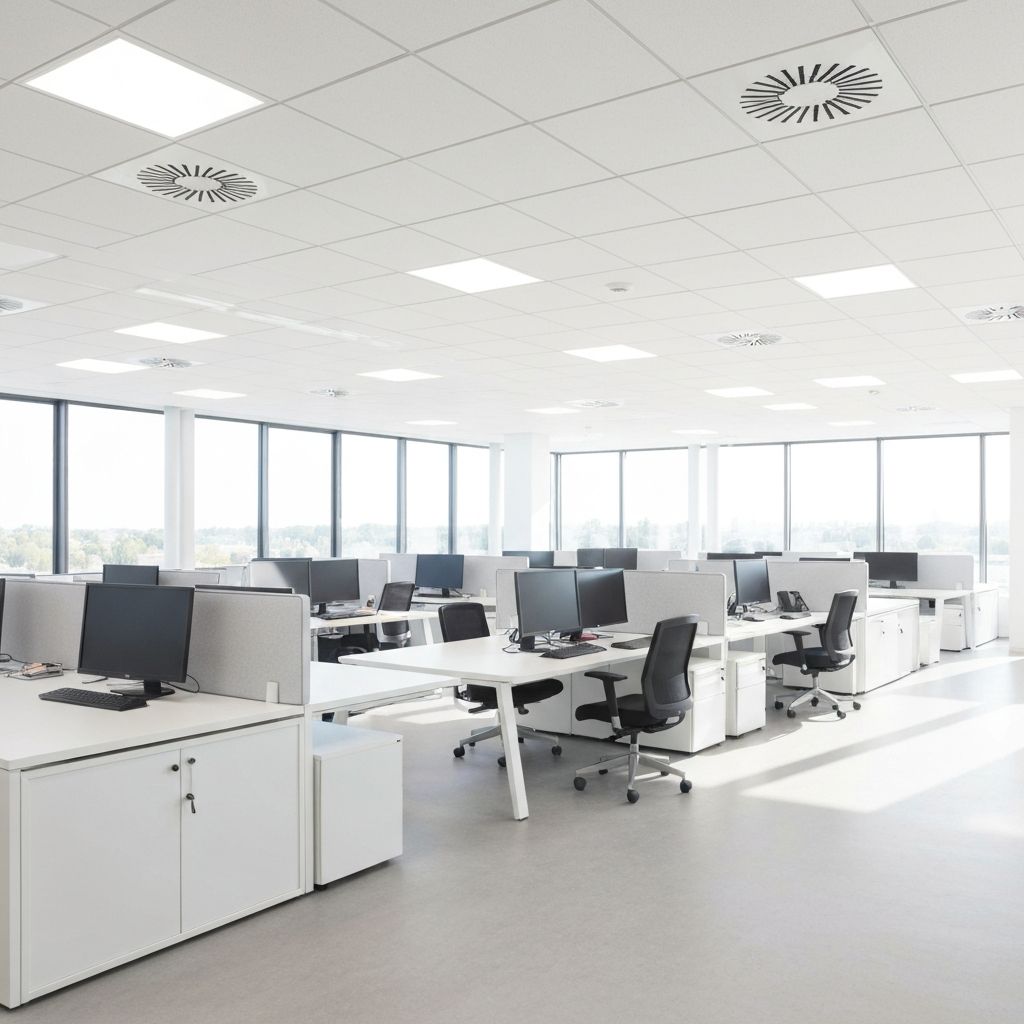
Most people think of office air quality as an HVAC problem, and the ventilation system certainly matters. But a significant share of what employees breathe indoors is shaped by how, and how well, the space is cleaned. Dust, allergens, mold spores, and volatile chemicals accumulate on surfaces, in carpets, and in soft furnishings, then circulate every time the air moves. Professional cleaning done the right way is one of the most direct and cost-effective levers a facility manager has for improving indoor air quality and, with it, employee health and productivity.
Why Indoor Air Quality Is a Cleaning Issue
The EPA has consistently noted that indoor air can be more polluted than outdoor air, and that Americans spend the vast majority of their time indoors. In an office, the primary indoor pollutants are within a cleaning program's control: particulate matter and dust, biological contaminants like mold and bacteria, and volatile organic compounds from products and materials. When cleaning is superficial, these contaminants simply get redistributed rather than removed. Effective cleaning removes them from the building entirely.
Cleaning Practices That Genuinely Improve Air Quality
HEPA Filtration Vacuuming
Standard vacuums can push fine dust straight back into the air through the exhaust. Vacuums fitted with true HEPA filtration capture fine particulates rather than recirculating them. For carpeted offices, regular HEPA vacuuming is one of the highest-impact things a cleaning crew can do for air quality, because carpet acts as a reservoir for allergens and dust.
Microfiber Instead of Feather Dusting
Feather dusters and dry cloths largely move dust around. Microfiber cloths physically trap and hold particles, removing them from the environment. Damp microfiber dusting of horizontal surfaces, vents, sills, and electronics prevents the fine dust that fuels allergy and respiratory complaints.
Low-VOC and Certified Products
Cleaning products themselves can be a source of indoor air pollution. Using Green Seal or EPA Safer Choice certified low-VOC products reduces the chemical off-gassing that causes headaches, eye irritation, and respiratory discomfort. This is especially important in sealed office environments where fumes have nowhere to go.
Proper Floor and Entryway Care
A large portion of indoor dust and pollutants is tracked in from outside. Well-maintained walk-off matting at entrances captures soil before it spreads, and regular deep extraction of carpets and hard-floor scrubbing removes what does get through. Entryway management is an underrated air-quality strategy.
Restroom and Moisture Control
Damp areas breed mold and bacteria that become airborne. Thorough restroom cleaning, prompt attention to leaks and standing water, and keeping humidity in check all limit the biological contaminants that degrade air quality and trigger sensitivities.
Regular Vent and High-Surface Dusting
Supply and return air vents accumulate a layer of dust that gets blown back into occupied space every time the HVAC cycles. The same is true of the tops of partitions, light fixtures, and other high surfaces that rarely get touched in a routine wipe-down. Scheduling periodic high-dusting keeps these hidden reservoirs from continuously reseeding the air with particulates.
The Business Case
Air quality isn't just a comfort issue; it has measurable business consequences. Poor indoor air is associated with increased sick days, reduced concentration, and symptoms often grouped under "sick building syndrome," including fatigue, headaches, and irritation. Cleaner air supports better cognitive performance and fewer complaints. For employers, that translates into reduced absenteeism and a more comfortable, professional environment for staff and visitors alike. It also supports compliance with OSHA's general duty to provide a workplace free of recognized hazards, and it contributes to green building certifications for organizations pursuing them.
Building a Cleaning Program Around Air Quality
Improving air quality isn't about cleaning harder; it's about cleaning smarter with the right tools and cadence. A well-designed program combines daily HEPA vacuuming and microfiber dusting, periodic deep carpet extraction, regular vent and high-surface dusting, low-VOC chemistry, and attention to moisture. Each of these on its own helps; together they meaningfully change what occupants breathe.
Cleaner Air for Naperville Offices
If your team is dealing with dust complaints, allergy flare-ups, or that stale-office feeling, the cleaning program is often where the fix starts. Naperville Janitors uses HEPA-filtration equipment, microfiber systems, and certified low-VOC products to improve indoor air quality for offices and commercial buildings across Naperville and the surrounding suburbs. With over a decade of experience serving local businesses, we can assess your space and build a cleaning plan focused on healthier air. Contact our team for a free walkthrough and quote.