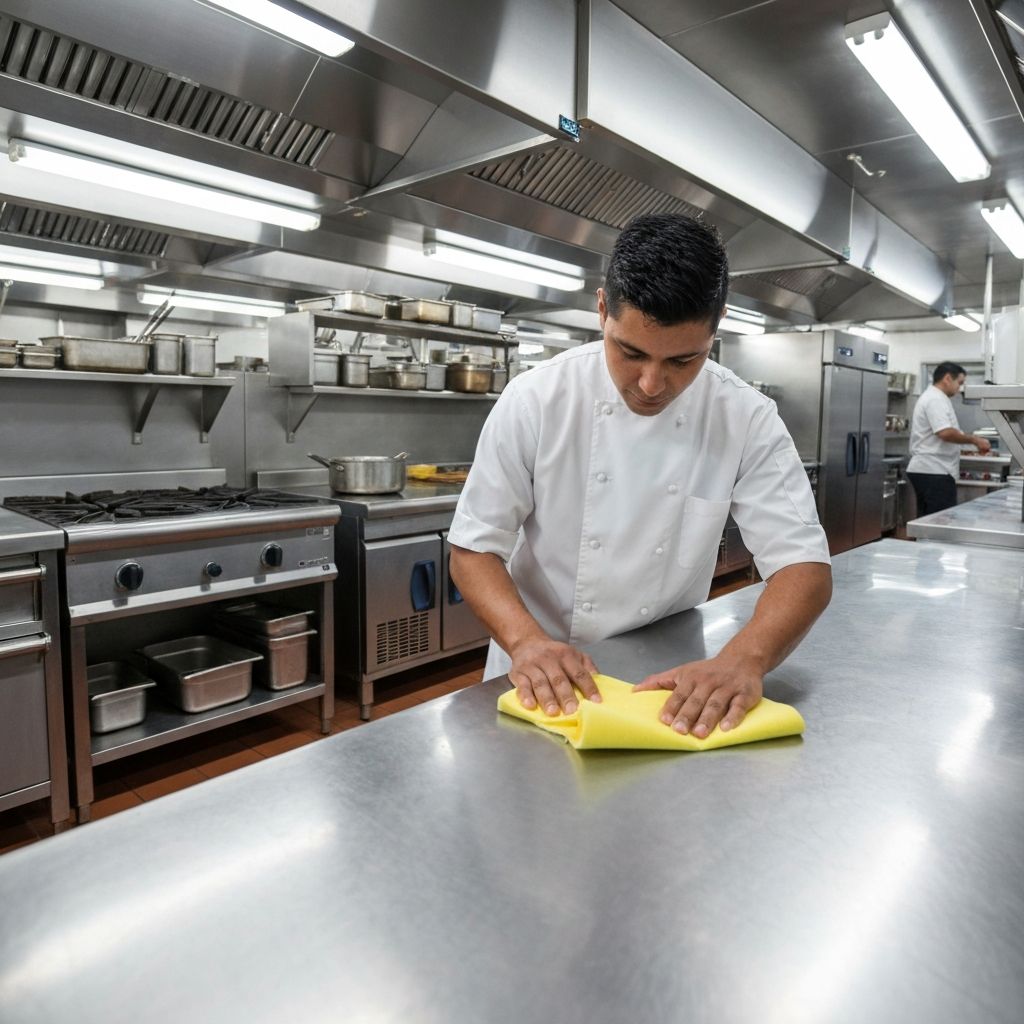
A commercial kitchen is one of the most demanding environments to keep clean. Grease, food debris, high heat, and constant foot traffic create conditions where bacteria and pests thrive if cleaning slips even slightly. A structured cleaning schedule built around daily, weekly, and monthly tasks is the single most reliable way to stay ahead of health inspections, protect your customers, and extend the life of expensive equipment. Below is a practical checklist that mirrors the expectations set out in the FDA Food Code and enforced by local health departments across DuPage County.
Daily Cleaning Tasks
Daily cleaning is about controlling the two things that accumulate fastest during service: food residue and grease. These tasks should happen during and immediately after each shift, while surfaces are still warm and soil hasn't hardened.
- Wipe and sanitize all food-contact surfaces: Prep tables, cutting boards, and counters need a clean-then-sanitize approach. The FDA Food Code requires food-contact surfaces to be cleaned and sanitized throughout the day, especially between raw and ready-to-eat foods.
- Clean the cooking line: Wipe down ranges, flat tops, and fryers, and empty grease traps as needed. Change fryer oil per your usage schedule and filter it daily.
- Sweep and mop floors: Degrease floor mats and mop with a commercial-grade degreaser at close. Grease-slicked floors are both a slip hazard and a pest attractant.
- Empty and sanitize trash and recycling: Wash bins, replace liners, and take waste to the dumpster to avoid overnight odor and pests.
- Clean sinks and hand-wash stations: Keep three-compartment sinks and dedicated hand sinks stocked and clean to support proper warewashing and hand hygiene.
Weekly Cleaning Tasks
Weekly deep cleaning targets buildup that daily wiping misses. This is where grease that has crept into corners, seals, and behind equipment gets addressed before it becomes a hazard.
- Clean behind and under equipment: Pull out reachable ranges, fryers, and cold tables to clear food debris and grease that pests feed on.
- Delime sinks and faucets: Hard-water scale builds up quickly and can harbor bacteria; a weekly deliming keeps fixtures functional.
- Wash walls and backsplashes: Grease aerosolizes during cooking and settles on nearby walls. Degrease tiled and stainless surfaces around the cook line.
- Clean refrigeration coils and door gaskets: Wipe gaskets and vacuum condenser coils to prevent mold in seals and to keep units running efficiently.
- Deep-clean floor drains: Scrub and treat drains to prevent the biofilm and odor that draw drain flies.
Monthly Cleaning Tasks
Monthly tasks protect the systems that keep your kitchen safe over the long term. Several of these overlap with fire-safety and code compliance, so document when they are completed.
- Deep-clean the exhaust hood and filters: Grease-laden hood filters are a leading fire risk. While the hood ductwork itself typically requires professional service on an NFPA 96 schedule, the accessible hood surfaces and baffle filters should be degreased monthly.
- Descale and sanitize ice machines: Ice is a food, and ice machines are a common source of contamination when neglected. Follow the manufacturer's descaling and sanitizing procedure.
- Clean ovens, walk-ins, and dry storage: Empty and wash walk-in coolers and freezers, rotate and inspect dry goods, and deep-clean oven interiors.
- Wash ceilings, vents, and light fixtures: Airborne grease settles on overhead surfaces; cleaning them reduces contamination risk and improves lighting.
- Inspect and calibrate for compliance: Verify sanitizer concentrations, thermometer accuracy, and that your cleaning logs are complete and available for inspection.
Why a Written Schedule Matters
Health inspectors don't just look at how clean a kitchen appears in the moment; they look for evidence of a system. A documented cleaning schedule with assigned responsibilities and completion logs demonstrates due diligence and consistency. It also protects you when staff turns over, because the standard lives in the process rather than in one experienced employee's memory. Pair the checklist with proper chemical dilution, color-coded tools to prevent cross-contamination, and clearly labeled sanitizer buckets.
Professional Kitchen Cleaning in Naperville
Even the most disciplined in-house team benefits from professional deep cleaning for the tasks that are easy to defer, such as hood degreasing, floor drain treatment, and behind-equipment buildup. Naperville Janitors has spent more than a decade helping restaurants, cafes, and food-service operations across Naperville and the surrounding suburbs stay inspection-ready. We build cleaning schedules around your service hours and health department expectations so nothing slips through the cracks. If you'd like a walkthrough of your kitchen and a free, no-obligation quote, contact our team and we'll put together a plan that fits your operation.