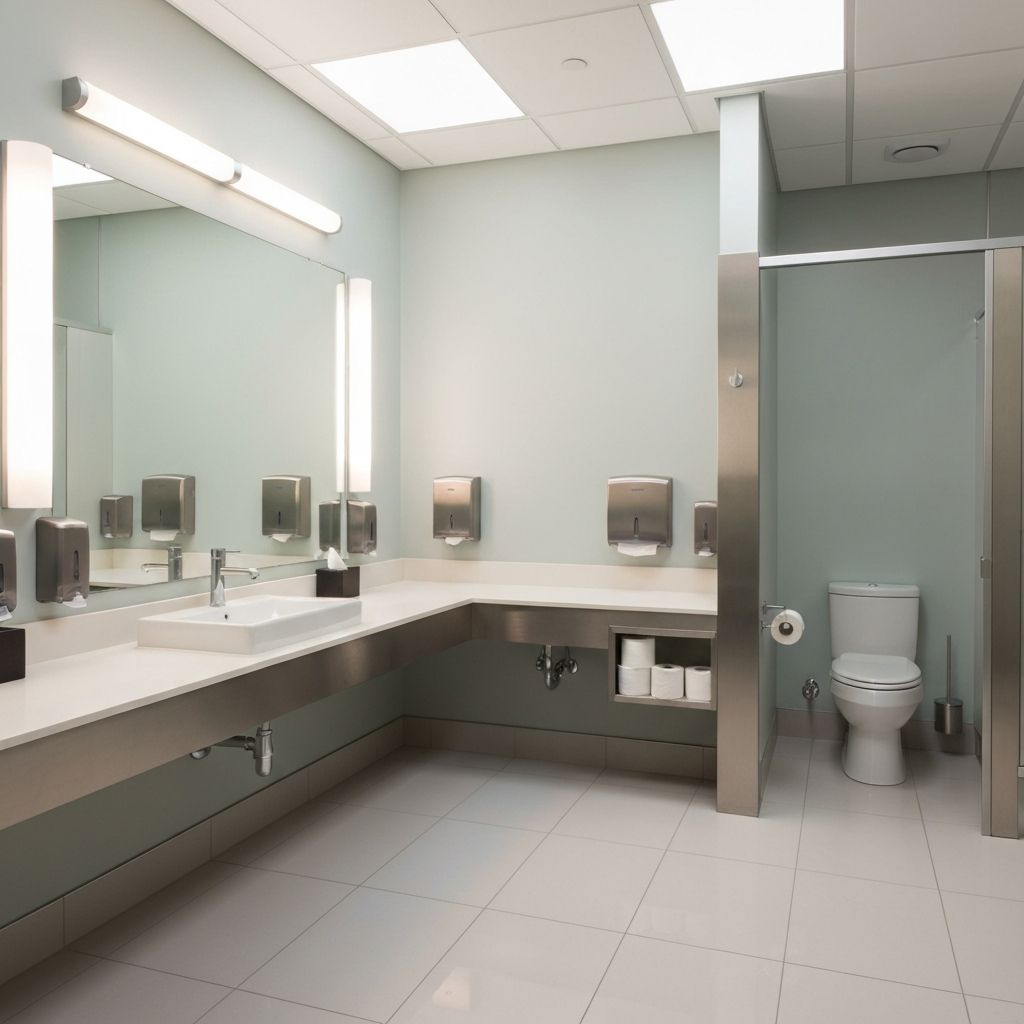
Few areas shape a visitor's impression of a business faster than the restroom. A clean, well-stocked, odor-free restroom signals that a company cares about details and about the people who use its space, while a neglected one undermines confidence in everything else. Beyond impressions, restrooms are among the highest-risk areas in any commercial building for the spread of germs. Getting hygiene right is part public health, part regulatory compliance, and part daily discipline. This article lays out the standards and practices that keep commercial restrooms genuinely clean, not just superficially tidy.
Why Restroom Hygiene Deserves Extra Attention
Restrooms concentrate high-touch surfaces (faucets, flush handles, dispensers, door hardware, stall latches) that many hands contact throughout the day. The CDC consistently emphasizes hand hygiene and surface cleaning as core defenses against the spread of illness, and restrooms are where both meet. For employers, there's also a compliance dimension: OSHA requires that workplaces provide clean, sanitary, and accessible toilet facilities, and expects them to be maintained in good working order. A restroom program isn't optional housekeeping. It's a health and legal responsibility.
Cleaning Versus Disinfecting
These terms get used interchangeably, but they're different steps and both matter. Cleaning removes soil and organic matter with detergent and physical action. Disinfecting uses an EPA-registered product to kill pathogens on an already-clean surface. Disinfectant applied over grime doesn't work well, because organic material shields microbes and interferes with the chemistry.
- Clean first: remove visible soil so the disinfectant can contact the surface.
- Respect dwell time: EPA-registered disinfectants require a specific wet contact time (often several minutes) to be effective. Wiping too soon defeats the purpose.
- Follow the label: the product label is the legally binding instruction set under EPA registration, including dilution and safety guidance.
Prioritize High-Touch Surfaces
Not every square inch of a restroom carries equal risk. Focus disinfection where hands land most often.
- Faucet handles and flush valves: touched by nearly every user, often before hands are washed.
- Stall latches and door handles: including the main entry and exit door.
- Dispensers: soap, towel, and sanitizer levers.
- Baby-changing stations: high-risk and frequently overlooked.
Odor Control Done Right
Persistent restroom odor is almost always a symptom, not a fragrance problem. Masking it with air fresheners hides the cause while it worsens. The real sources are usually bacteria in grout, floor drains that have dried out, and organic buildup around toilet bases and urinals. Address odor by cleaning the source: use enzymatic or bio-based cleaners on grout and drains, keep floor drains primed with water, and clean beneath and behind fixtures where residue accumulates. Proper ventilation does the rest.
Accessibility and the ADA
A hygienic restroom must also be a usable one for every visitor. The Americans with Disabilities Act sets requirements for accessible restrooms, including clear floor space, grab bars, and reachable dispensers and controls. Cleaning crews and facilities managers play a direct role in maintaining that compliance day to day.
- Keep clear floor space unobstructed: mop buckets, signage, and supplies must not block accessible stalls or turning space.
- Maintain dispenser reach ranges: soap and towel dispensers should stay within ADA-compliant reach and be kept stocked.
- Verify grab bars and hardware: report loose grab bars or malfunctioning fixtures promptly.
Supplies, Stocking, and Documentation
The most thorough cleaning fails if the restroom runs out of soap or towels an hour later. Reliable hygiene depends on consistent restocking and simple accountability.
- Stock proactively: replenish soap, paper products, and seat covers before they run out, not after complaints.
- Use inspection logs: a posted or digital check sheet documents service times and supports accountability.
- Color-code equipment: dedicating specific microfiber cloths and mops to restrooms prevents cross-contamination with other areas, a practice ISSA and infection-control guidance both endorse.
Building a Restroom Cleaning Routine
Effective programs layer frequencies. Multiple daily touch-point wipe-downs handle the surfaces that get dirty fastest, a full clean and disinfect resets the space each day, and periodic deep cleaning tackles grout, drains, and fixtures that daily service can't fully reach. Matching frequency to traffic (a busy public lobby restroom versus a low-use back office) keeps the effort where it counts.
Trusted Restroom Care Across Naperville
Restroom hygiene is exacting work, and it's where cutting corners shows up fastest, in odor, in complaints, and in illness. Naperville Janitors has kept restrooms genuinely clean for roughly 320 offices, medical facilities, and industrial sites across Naperville and the surrounding suburbs for over a decade, using EPA-registered disinfectants, color-coded tools, and documented inspection routines. If your restrooms deserve better than a quick wipe-down, contact our team for a free quote and a service plan built around your building's traffic and standards.